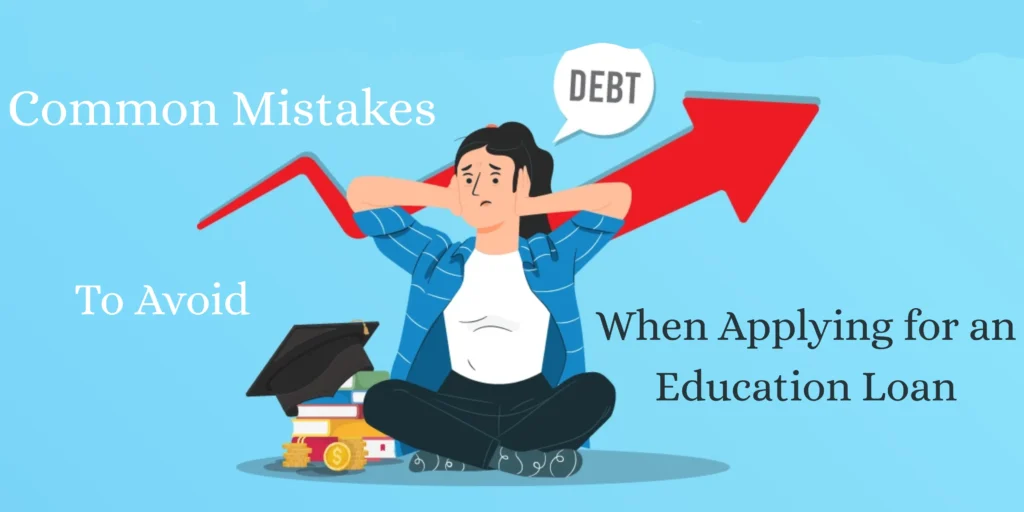
Many students in India make Common Mistakes to Avoid When Applying for an Education Loan. Loans have turned out to be a necessary tool for any student seeking to further his or her education in India or even outside the country. As tuition fees, accommodation, travelling, and other academic fee costs continue to rise, most students have developed the use of loans to secure their academic objectives. Nonetheless, the application of education loan is a task that should be planned and taken seriously.
There are typical errors that many students commit in the process of securing loans that may cost them a lot in terms of lost time, denied loans, or adverse loans. The knowledge of such errors and the prevention can have a major effect on increasing the chances of obtaining a good education loan. With the knowledge of possible pitfalls, students and their families are able to make superior financial choices and a hassle-free loan application process.
Not Researching Loan Options Properly
Researching various loan options before applying is one of the most common mistakes that students commit. Most applicants just pick the first bank or other financial institution that they come across without even comparing interest rates, repayment term and requirements.
Various lenders have different loan products and the terms of the loans can differ by large. The interest rates, loan limit, processing fee, and repayment option will vary depending on the lender. Avoidable is the event where the students settle on a loan with a higher interest rate or more rigid terms of repayment.
Students should take time and compare various lenders and get to know their policies and hence find the best loan that suits their needs.
If you are facing some issue while searching for the best Abrod Education Loan, then don’t worry Credveda, those who solve your issues related to your finances.
Borrowing More Than Necessary
The other one is the tendency to borrow more money than one actually needs to study. Although the lenders might provide huge sums of money in the form of loans, it does not imply that students should take the maximum that is offered.
The more loan one obtains, the greater the interests and the larger the financial load they have at the time of graduation. Most students do not realize the consequences of long-term loan repayment and even later have troubles when it comes to installments.
One should be careful in estimating the overall cost of education and it is enough to take a loan just in time and sufficient to meet tuition fees, living expenses and other necessary academic expenses. The financial stress in the future can be minimized through responsible borrowing.
Ignoring Interest Rates and Loan Terms
education loan interest rates are very important in the overall cost of an education loan. Others are pre-occupied with the amount of loan they get and do not bother with the interest rate and conditions of repayment. This may result in extremely increased repayment expenses in the long run.
loans can be either fixed or floating interest charged and both forms have their own consequences to a borrower. The students also need to be cautious of processing charge and prepayment and the other hidden costs involved in the lending of the money.
It is always necessary to get to know all the terms and conditions of the loan agreement in order to be able to prevent financial surprises in the future.
Submitting Incomplete or Incorrect Documents
The application of the education loan requires documentation as one of the most significant components. Banks demand different documents to confirm the identity, academic qualifications, and financial position of the applicant as well as co-applicant.
Delays in loan approval are primarily because of sub- filing, or filing of incomplete or incorrect documents. The absence of documents may compel the banks to constantly demand further explanation of this information, and thus, the process is slowed down, and may even lead to rejection.
The list of the necessary documents should be reviewed by the students, and all the paperwork should be correct, current, and orderly before sending the loan application.
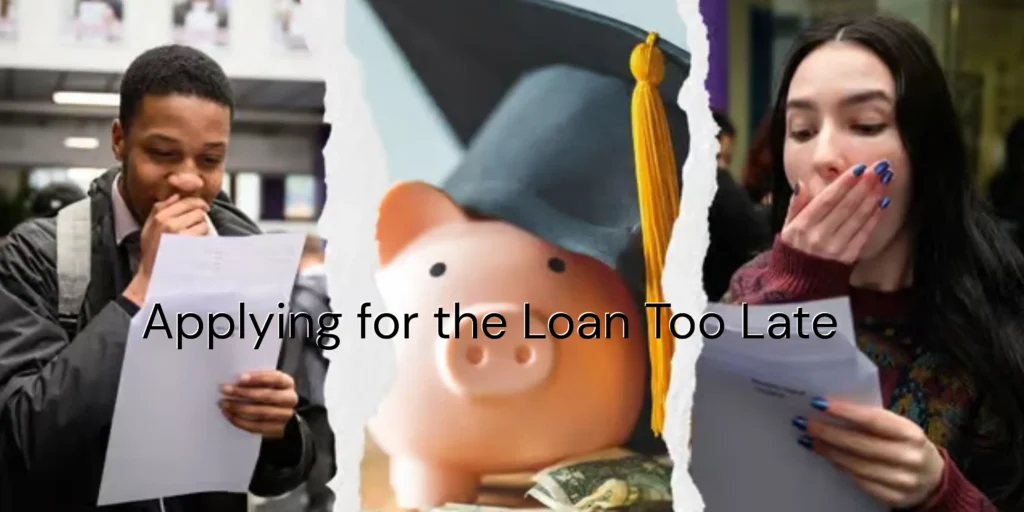
Applying for the Loan Too Late
The other consideration when seeking an education loan is timing. A large number of students put off application to the last minute hoping that the loan will be given at short notice. Nevertheless, a loan application may require weeks to be approved as banks must take time to check documents, eligibility and handle the application.
Late applications are also a source of stress that may not be necessary like in the case when the university has a certain deadline to make tuition payments. In certain instances, even the process of admission of the student can be impacted by the delay in the loan approval process.
In order to prevent such issues, students must begin the loan application process immediately they get the offer of admission to the university.
Not Understanding the Role of the Co-Applicant
A majority of the education loans demand the presence of a co-applicant, and that most of the time is a parent or a guardian who is equally tasked with the responsibility of loan repayment. Other students do not even realize the significance of the financial profile of the co-applicant when they are applying to take a loan.
Banks are keen to assess the income, credit record and financial stability of the co-applicant and in case it is not satisfactory, they decline to disbursing the loan. In case the co-applicant is having a poor credit score or unstable income, the loan application can be rejected or approved with poor terms.
A student must also make sure that his co-applicant is of excellent financial presentation and completely knowledgeable of the loan obligations.
Overlooking the Moratorium Period and Repayment Terms
Most students are interested in borrowing the money and missing essential information concerning the repayment. Education loans normally come with some moratorium period where the student is not required to make full payments on the loans. This is normally the duration of the course and some grace period following the course.
But there are loans which might have to be paid interests throughout the course of the moratorium. Unless students know about such conditions, they will have to encounter unanticipated financial commitments during the time they are in school.
Taking a closer look at the repayment terms and getting to know when they start paying can assist students to spend their money in a more wise manner.
Ignoring Scholarship and Financial Aid Opportunities
The other mistake that students usually commit is complete dependency on education loans without trying out scholarships, grants, and financial aid programs. Most universities and organizations are providing scholarships to international or domestic students.
With the help of scholarships, the overall cost of education can be greatly lowered and the amount of required loans can be decreased. With the use of scholarships and education loans, learners will be able to lower their expenses and lessen their repayment in the future.
Researching on the available scholarships and taking them in conjunction with the education loan process is always good.
Not Reading the Loan Agreement Carefully
Another mistake that is prevalent is signing the loan agreement without going through its terms. The loan agreement has key provision on the interest rates, the time of repayment, penalty and the responsibility of the borrower.
Other students also enter into the agreement at a fast rate not necessarily having the entire understanding of these terms and this may be confusing or may result to some financial problems in the future. One must ensure that he/she reads the agreement carefully and requests the lender to clarify in case of any ambiguous terms.
By taking time to familiarize with the loan contract, students will be in a position to know all the financial obligations.
Conclusion
Education loan application is one process that is significant in realizing both academic and career objectives. Nonetheless, it is a process that needs a lot of planning, research and attention to details. The wrong research, taking too much money, not considering the interest rates, and filing incomplete documents as well as making applications at the last moment are some of the most common mistakes that can lead to unnecessary inconveniences when it comes to the loan application process.
Knowing these errors and taking positive measures to prevent them will help the students increase their possibility of getting a good education loan. Effective financial planning, documentation and clear comprehension of terms of the loan will assist students to be able to control their finances in education and concentrate on their academic achievement.